
Margins remain tight across much of the ag economy, and uncertainty continues to influence decisions on the farm and in rural businesses. From rising input costs to evolving technology and global market pressures, the issues affecting agriculture are also shaping conversations inside community banks across Iowa.
That’s the focus of this year’s ag panel discussion at the 55th Annual Convention.
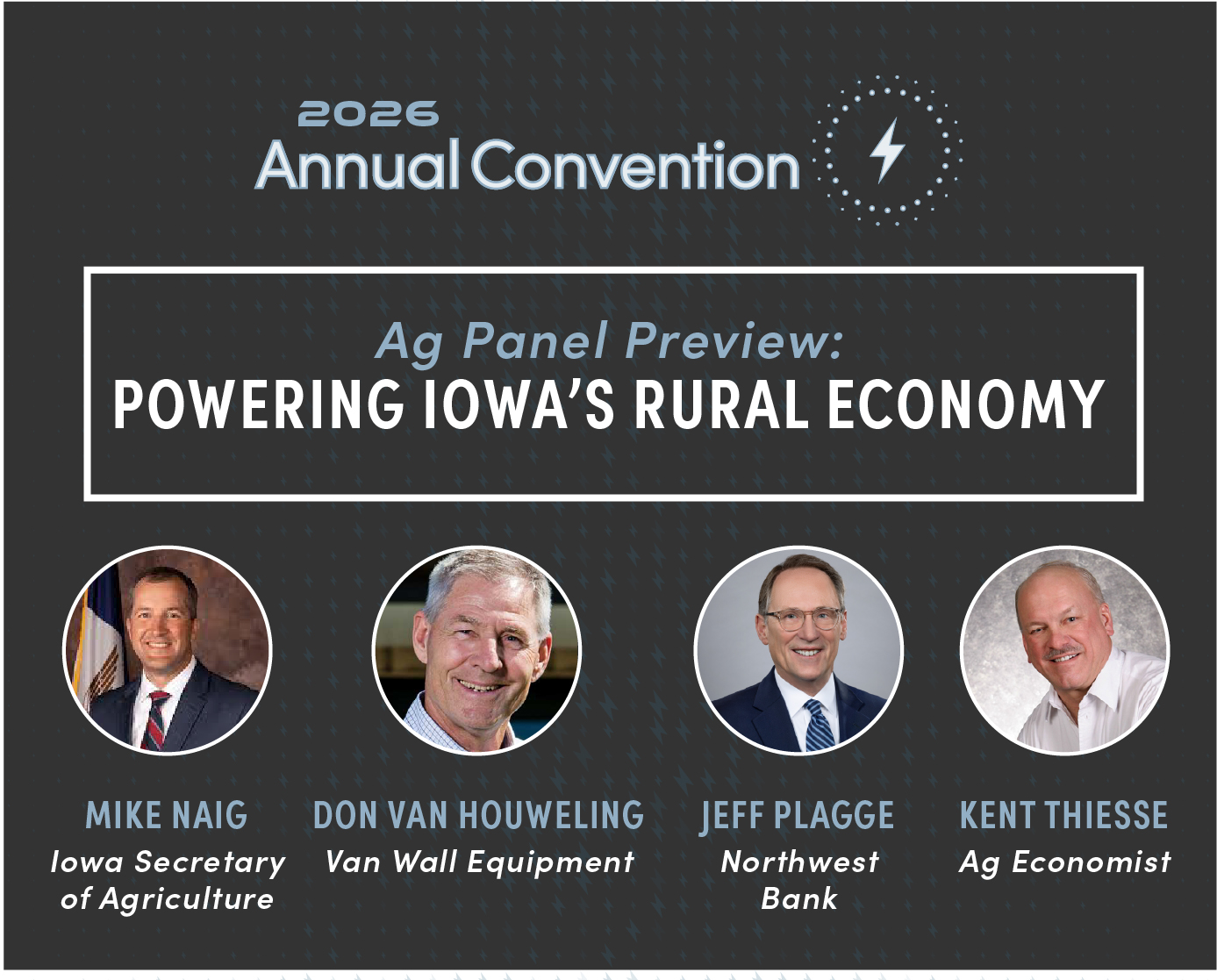
Moderated by ag economist and analyst Kent Thiesse, the panel will feature Iowa Secretary of Agriculture Mike Naig and Don Van Houweling, owner and CEO of Van Wall Equipment, bringing together perspectives from policy, production, and ag business.
According to Thiesse, many crop producers are now in their third consecutive year of operating with extremely tight or even negative profit margins. Those conditions are creating ripple effects throughout rural communities and agriculture-related businesses.
“These economic challenges obviously become extremely important to community banks in rural areas and to the State of Iowa,” said Thiesse.
Secretary Naig echoed those concerns, pointing to the continued pressure on farm profitability in what he described as a “high-cost, tight-margin environment.” He noted that sustained high input costs, combined with tighter margins and higher interest rates, are putting strain on working capital and increasing the importance of strong lender relationships.
“That makes access to credit, flexibility, and strong lender relationships more important than ever,” Naig said.
The panel discussion will explore several key issues currently impacting the ag economy, including rising fuel and fertilizer costs, global instability, tariffs, and the
future of renewable energy opportunities like ethanol and soybean diesel production.
Naig also sees opportunity ahead, particularly through market expansion, value-added agriculture, and biofuels. He pointed to Iowa’s continued investment in E15 and growing demand for locally grown products through the
Choose Iowa program as examples of how agriculture continues to evolve and diversify.